Background
IPC Section 375, Exception 2: Traditionally excluded non-consensual sexual intercourse by a husband with his wife from the definition of rape, subject to the statutory age condition.
BNS Section 63: Repealed the IPC but retained the marital rape exception, with the wife's age threshold raised to 18 years.
The Karnataka High Court (2022) allowed a husband to face rape charges for allegedly forcing sexual intercourse on his wife.
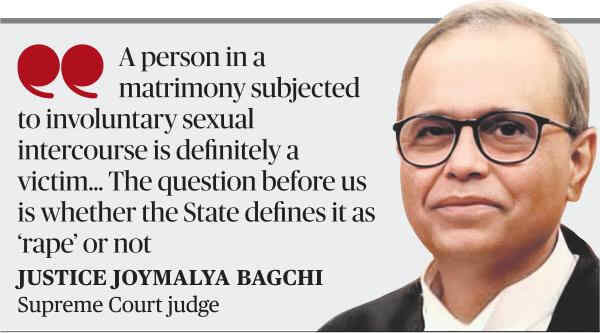
The Supreme Court is examining whether courts can permit such prosecution when Parliament has expressly created an exemption.
The Justice J.S. Verma Committee (2013) had recommended removing the marital rape exception.
Key Issues
Consent and bodily autonomy: Marriage does not automatically imply permanent sexual consent.
Legislative domain: Criminal offences are primarily defined by Parliament through penal legislation.
Judicial review: Courts can examine whether the marital rape exception violates constitutional rights.
Article 14: Raises questions of equality before the law and differential treatment of married and unmarried women.
Article 21: Sexual autonomy, dignity and bodily integrity form part of the right to life and personal liberty.
Protection of marriage vs individual rights: The debate involves balancing marital privacy with women's dignity and autonomy.
Challenges
Conflict between existing law and constitutional values: The law retains an exception while constitutional jurisprudence increasingly emphasises dignity and autonomy.
Fear of misuse: Opponents argue that criminalisation could lead to false or difficult-to-prove allegations.
Proof and investigation: Sexual offences within marriage can be particularly difficult to establish because of the private nature of the relationship.
Institutional question: Courts must avoid effectively creating a new criminal offence while interpreting existing legislation.
Social stigma: Victims may face family and societal pressure against reporting abuse.
Way Forward
Parliament should undertake a comprehensive review of the marital rape exception.
Any reform should clearly define consent within marriage and provide appropriate safeguards against false complaints.
Strengthen evidence-gathering, investigation and victim-support mechanisms.
Ensure protection against domestic and sexual violence without undermining due process.
Judicial interpretation should continue to uphold dignity, bodily autonomy and equality, while respecting separation of powers.
Conclusion
The marital rape debate represents a conflict between an old statutory exception and evolving constitutional principles of dignity, equality and individual autonomy. The Supreme Court's present question is not whether forced sex within marriage is harmful, but whether courts can criminalise it as rape when Parliament has expressly retained an exemption. A clear legislative resolution is therefore essential.


