Background
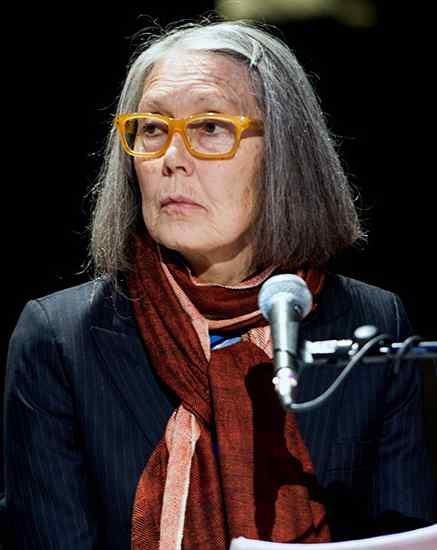
Who: Anne Carson, a Canadian poet, essayist and translator, born in Toronto.
Age: 76 years, according to the news report.
Literary style: She blends poetry, essays and fiction, drawing inspiration from ancient Greek and Roman literature.
Major works: Eros the Bittersweet, Autobiography of Red, Men in the Off Hours and Norma Jeane Baker of Troy.
Translations: Her works include If Not, Winter, based on fragments of the ancient Greek poet Sappho, and translations of Greek tragedies such as Electra, Antigone and Bakkhai.
Award: The report states that the Nobel Prize carries prize money of 12 million Swedish kronor, approximately US$1.2 million.
Features
Classical and modern fusion: Her writing connects ancient literature with contemporary experiences.
Experimentation with genres: She combines poetry, prose, essays and fiction.
Innovative translation: Her translations are valued as creative literary works in their own right.
Literary significance: Her work explores the relationship between language, meaning and human emotions.
Accessibility of poetry: Carson argues that poetry can be useful in a fast-paced world because of its brevity, although she acknowledges exceptions such as Homer.
Challenges
Limited mass readership: Experimental literature can be difficult for general readers to understand.
Language barriers: Literary works written in one language may not reach readers in other languages without translation.
Balancing innovation and accessibility: Literary experimentation may make works more challenging for a broad audience.
Declining reading attention: In a fast-paced digital environment, long or complex literary works may struggle to attract sustained attention.
Recognition of diverse literary traditions: Literary awards face the challenge of representing different languages, cultures and writing styles.
Way Forward
Promote translations of literary works into regional and international languages.
Encourage reading habits through libraries, educational institutions and literary festivals.
Include contemporary and classical literature in school and university curricula.
Use digital platforms, audiobooks and accessible editions to reach younger readers.
Encourage literary awards and institutions to recognise diverse voices, languages and writing styles.
Conclusion
The recognition of Anne Carson shows that poetry, classical literature and literary experiments are still important in modern society. Her works show that classical notions can be renewed through modern means of expression. The award emphasises the significance of translation and cultural communication.