Background
The Asiatic lion (Panthera leo persica) is the only surviving wild lion population in India and is naturally restricted to the Gir landscape of Gujarat.
Project Lion
Launched: 2020
Objective: Long-term conservation of the Asiatic lion and its habitat.
Major focus:
Habitat improvement
Disease surveillance
Scientific population monitoring
Community participation
Genetic and gene-pool conservation
Tools: Radio-collaring, camera traps and genetic monitoring.
Core concern: Concentration of the entire wild population in one landscape creates a single-population risk.
Emerging Concerns
An increasing number of lions are moving outside protected areas.
Gir is approaching carrying capacity.
Greater dispersal is increasing human–wildlife conflict.
Growing population strengthens the need for a second secure habitat.
Government Initiatives
Project Lion (2020): Asiatic lion conservation.
Project Tiger (1973): Tiger conservation.
Project Elephant (1992): Elephant and corridor conservation.
Project Snow Leopard (2009): Snow leopard and Himalayan ecosystem conservation.
Integrated Development of Wildlife Habitats: Supports protected areas and endangered species recovery.
Back2Basics: Asiatic Lion
Scientific name: Panthera leo persica
IUCN: Endangered
CITES: Appendix I
Wildlife (Protection) Act, 1972: Schedule I
Only wild population: India
Natural range: Gir landscape, Gujarat
Proposed second home: Barda Wildlife Sanctuary, Gujarat
Why is a Second Home Needed?
Single-site risk: Disease or disaster in Gir could threaten the entire species.
Habitat saturation: Increasing population is pushing lions beyond protected areas.
Human-wildlife conflict: Greater interaction with people and livestock.
Disease risk: Outbreaks such as Canine Distemper Virus (CDV) can threaten large carnivores.
Habitat fragmentation: Mining, roads and railways can disrupt dispersal corridors.
Challenges
Single-population vulnerability - dependence on Gir creates systemic extinction risk.
Carrying-capacity pressure -increasing population places greater demands on habitat and prey.
Human–wildlife conflict - dispersal into human-dominated areas increases interaction.
Disease outbreaks - concentrated populations can face large-scale disease impacts.
Habitat fragmentation - infrastructure can obstruct movement and dispersal.
Genetic resilience - maintaining adequate genetic diversity is important for long-term survival.
Second-home establishment - requires suitable habitat, prey, water, disease management and long-term ecological planning.
Conclusion
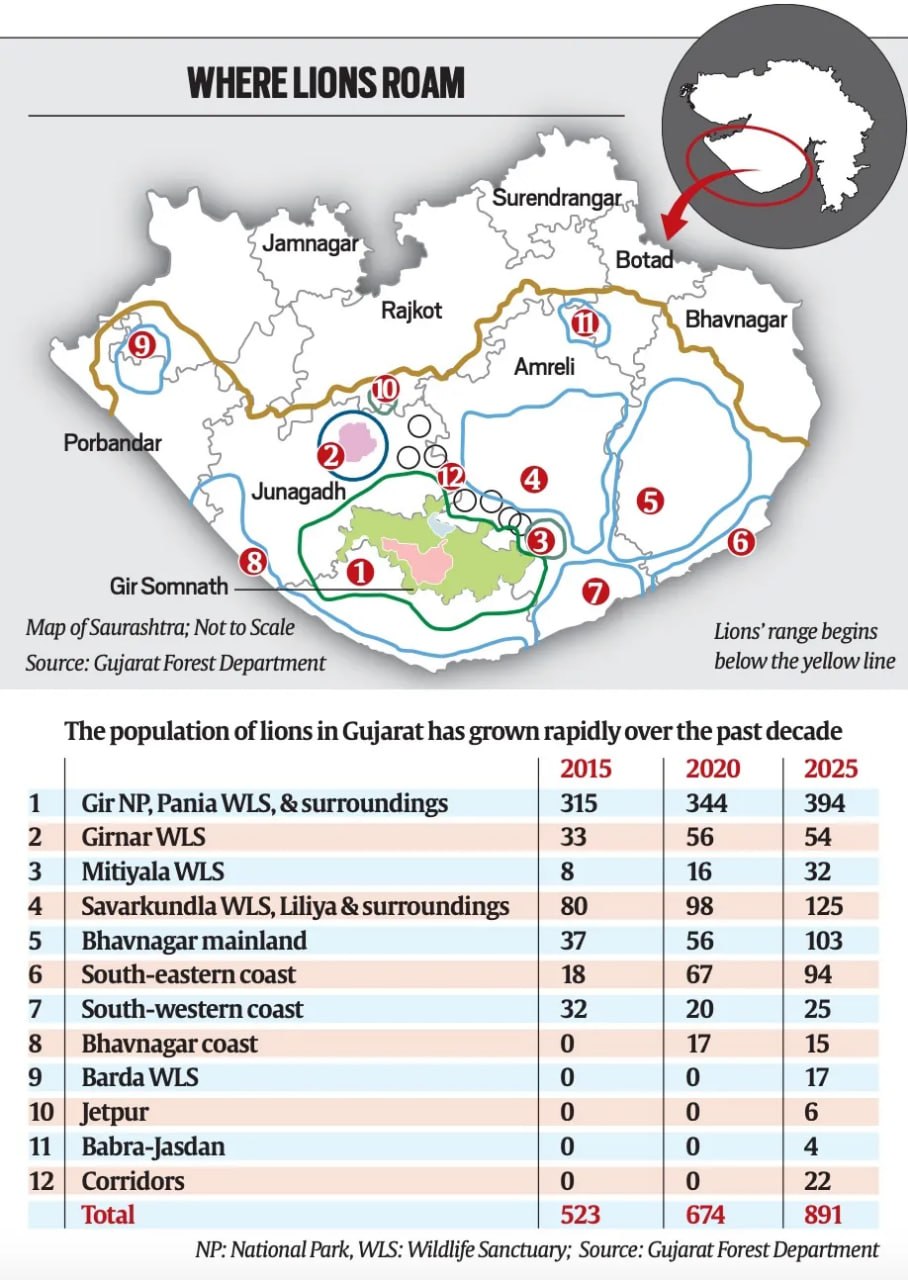
The increase of the Asiatic lion population from 523 to 891 reflects the success of the efforts made for their conservation. Nevertheless, the location of the entire population in one place represents a danger. Therefore, the next step in the conservation process should not only aim at increasing the number of lions, but also at increasing the population’s ability to survive in difficult conditions with a second viable population, etc.