DailyGS3medium

DRDO’s flight trial of high-altitude platform successful

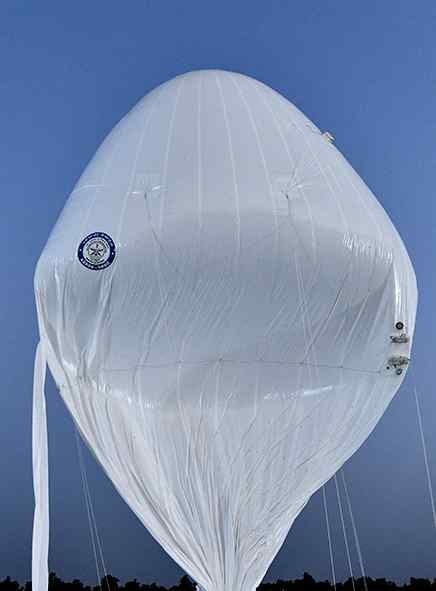
The DRDO tested the indigenously developed High Altitude Platform System (HAPS) from an altitude of 21 km. Developed by ADRDE, Agra, the HAPS can support ISR and communication. It will be able to supplement satellite-based, air and drone platforms, enhancing India’s military strength and its Aatmanirbhar Bharat motto.

7 Oct 2026 2 min read 3 views
DRDO’s flight trial of high-altitude platform successful

Quick Revision

Why in news: Recently, the Defence Research and Development Organisation (DRDO) has successfully flown an indigenous High Altitude Platform (HAPS). The experimental platform flew to a height of 21 km above the mean sea level. It flew at an altitude of 20 km for over 30 minutes. The development marks a vital move towards building long-endurance stratospheric aerial surveillance platforms. Singh said that the feat is one of the crucial milestones for Aatmanirbhar Bharat in defence technology.

Background

  • HAPS (High-Altitude Platform Systems) are aerial platforms designed to operate in the stratosphere, generally at around 20 km altitude.

  • They are intended to provide persistent surveillance and communication for long durations.

  • The platform was developed by DRDO's Aerial Delivery Research and Development Establishment (ADRDE), Agra.

  • It is a lighter-than-air system, unlike conventional aircraft.

  • HAPS can potentially complement satellites, aircraft and drones.

Features

  • Operating altitude: Around 20 km in the stratosphere.

  • Long endurance: Designed for prolonged aerial operation.

  • Surveillance role: Can provide continuous monitoring over large areas.

  • Inertial Measurement Unit (IMU): Helps determine movement, orientation and position.

  • GPS receiver: Provides navigation and positioning.

  • Onboard cameras: Enable aerial surveillance and observation.

  • Altitude-control mechanism: Helps maintain the required operating altitude.

  • Indigenous technology: Strengthens domestic defence manufacturing and technological capability.


Strategic Significance

  • HAPS can act as a bridge between drones/aircraft and satellites.

Potential applications:

  • Border and maritime surveillance

  • Intelligence, Surveillance and Reconnaissance (ISR)

  • Communication relay

  • Monitoring of remote and strategically sensitive areas

  • Disaster management and emergency communications

  • Persistent observation during military operations

Challenges

  • Low air density: At high altitude, reduced atmospheric density makes flight and control difficult.

  • Extreme conditions: Stratospheric temperatures and winds pose engineering challenges.

  • Energy requirements: Long-duration operation requires highly efficient power systems.

  • Stability and control: Maintaining a fixed position and altitude is difficult.

  • Payload limitations: Surveillance equipment must be carried without compromising endurance.

  • Communication: Reliable long-range communication systems are required.

Way Forward

  • Increase the platform's flight endurance and operational reliability.

  • Improve payload capacity for advanced surveillance sensors.

  • Develop better autonomous navigation and altitude-control systems.

  • Integrate HAPS into India's broader border-surveillance and ISR network.

  • Explore applications in communication, disaster management and environmental monitoring.

  • Promote greater participation of Indian PSUs, private industry and start-ups in HAPS technology.

Conclusion

A successful trial of HAPS marks a major stride towards the development of India's high-altitude and long-endurance aerial system capability. This would help in providing surveillance and communications while supporting satellites, planes and drones. It also helps in achieving the objective of a self-reliant India in military technology.


UPSC Prelims Facts

Term: DRDO's Successful Flight Trial of High-Altitude Platform System (HAPS)

Meaning: DRDO successfully flight-tested an indigenously developed High Altitude Platform System (HAPS)—a lighter-than-air stratospheric platform built by ADRDE, Agra—which flew to 21 km above mean sea level and sustained around 20 km altitude for over 30 minutes, designed for long-endurance Intelligence, Surveillance and Reconnaissance (ISR) and communication relay, complementing satellites, aircraft and drones under Aatmanirbhar Bharat.

Related: DRDO, Aerial Delivery Research and Development Establishment (ADRDE) Agra, stratosphere (~20 km), lighter-than-air systems, Inertial Measurement Unit (IMU), GPS receiver, onboard cameras, altitude-control mechanism, ISR, communication relay, Aatmanirbhar Bharat.

Core Themes: HAPS as a bridge between drones/aircraft and satellites; persistent surveillance and communication for border, maritime, remote-area and disaster-management applications; indigenous defence technology and self-reliance; challenges of low air density, extreme stratospheric conditions, energy requirements, stability and control, payload limitations and long-range communication; way forward through greater endurance and reliability, improved payload capacity, autonomous navigation, integration into India's ISR network and participation of PSUs, private industry and start-ups.

Prelims angle

Focus on key facts, terms and institutions mentioned above.

Mains angle

Link to relevant GS themes and frame analytical points.

Syllabus: Science & Technology, Defence

Download notes

Daily Current Affairs - 07 October 2026

Free download

Test yourself

Daily Current Affairs Quiz - 07 October 2026

Practice the related MCQs now.

Attempt the quiz
Free resource

Get free monthly Current Affairs PDF

Join thousands of aspirants. We'll send the compilation to your WhatsApp.

No spam. Unsubscribe anytime.

More from Current Affairs