Features
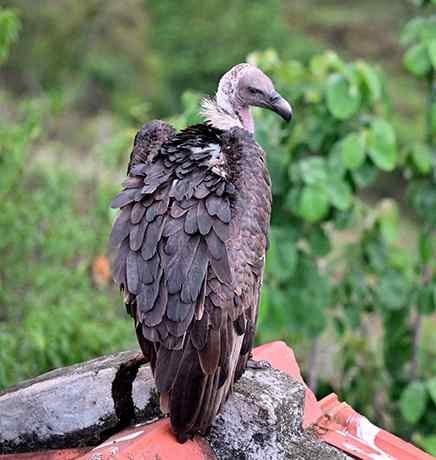
Scientific Name: Gyps bengalensis
Family: Accipitridae
Diet: Obligate scavenger, feeding mainly on carcasses of large mammals.
Habitat: Open forests, grasslands, agricultural landscapes, and cliffs or tall trees for nesting.
Ecological Role:
Rapid disposal of animal carcasses.
Prevents the spread of infectious diseases.
Maintains ecosystem health through nutrient recycling.
Mudumalai Tiger Reserve supports one of the largest remaining breeding populations of the species in South India.
Background
The White-rumped Vulture is one of India's most critically endangered vultures.
Historically widespread across the Indian subcontinent, its population declined by over 99% since the 1990s, mainly due to poisoning from the veterinary drug Diclofenac.
The species is listed as:
IUCN Red List: Critically Endangered
Wildlife (Protection) Act, 1972: Schedule I (highest protection)
CITES: Appendix II
The bird was:
Captive-bred and initially released in Tadoba-Andhari Tiger Reserve in December 2025.
Later rescued in Karnataka after falling ill.
Reintroduced into Mudumalai Tiger Reserve in April 2026 by the Bombay Natural History Society in collaboration with State Forest Departments.
Why are White-rumped Vultures Declining?
Veterinary use of diclofenac causes kidney failure.
Electrocution from power lines.
Collision with transmission lines.
Poisoning from contaminated carcasses.
Habitat degradation and food scarcity.
Challenges
Electrocution from overhead power lines remains a major threat.
Difficulty in acclimatisation of captive-bred birds after release into the wild.
Habitat degradation and disturbance.
Reduced food availability due to changes in livestock disposal practices.
Continued risk from toxic veterinary drugs in some areas.
Need for long-term post-release monitoring of reintroduced birds.
Way Forward
Insulate power lines and adopt bunched cabling in vulture habitats.
Install bird diverters on transmission lines to reduce collisions and electrocution.
Strengthen scientific monitoring using radio telemetry and satellite tracking.
Improve release protocols through soft-release enclosures and acclimatisation strategies.
Expand Vulture Safe Zones by eliminating harmful veterinary drugs and ensuring safe food sources.
Enhance coordination among Forest Departments, conservation NGOs, and power utilities.
Conclusion
The death of the radio-tagged White-rumped Vulture serves as an illustration of the difficulties associated with reintroduction of critically endangered species into their natural habitats. While captive breeding is definitely one of the most effective ways of saving a critically endangered species, the success of this process hinges on establishing a conducive environment through the elimination of such dangers as electrocution on power lines.