DailyGS3GS2medium

India Has No Excess Capacity, Bans Forced-Labour Imports

India dismissed the claim of structural excess capacity made by the U.S., arguing that the country’s manufacturing is based on demand, both domestic and international. It also highlighted its commitment to prohibiting forced labour and banning the import of forced labour products, as per its constitution and ILO rules.

3 Oct 2026 3 min read 13 views
India Has No Excess Capacity, Bans Forced-Labour Imports

Quick Revision

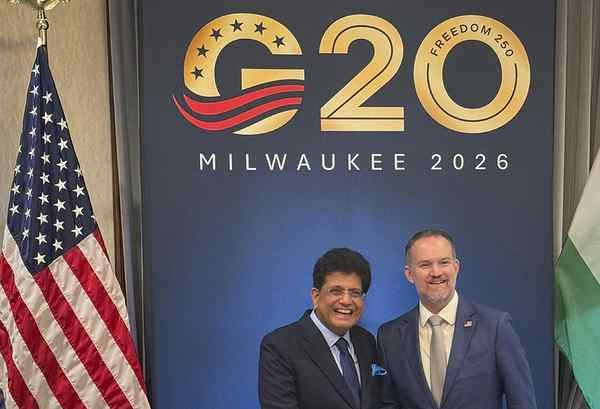
Why in news: Recently, Commerce Minister Piyush Goyal, while addressing the 2026 G20 Trade Ministers Meeting in Milwaukee, said that India does not have structural excess capacity in the sectors identified by the U.S. Moreover, he emphasised India’s efforts in prohibiting the import of products that are manufactured through forced labour.

Background

  • The U.S. has been examining whether countries are importing goods produced using forced labour and whether structural excess capacity in certain sectors is harming the U.S. economy.

  • India maintains that its approach should be based on specific and verifiable evidence, rather than assumptions about entire countries, regions or sectors.

  • India has highlighted its constitutional and international commitments against forced labour:

    • Article 23 of the Constitution prohibits trafficking in human beings and forced labour.

    • India has ratified ILO Conventions No. 29 and 105 relating to forced labour.

    • India amended its Foreign Trade Policy in July 2026 to prohibit imports of goods produced using forced labour.

  • On excess capacity, India argues that its manufacturing capacity is primarily driven by domestic demand as well as global markets.

Key Issues

Forced Labour

  • India stated that its commitment to eliminating forced labour is absolute and unconditional.

India's position includes:

  • Constitutional prohibition under Article 23.

  • Ratification of ILO Conventions 29 and 105.

  • Prohibition on imports of goods produced using forced labour.

  • Preference for evidence-based and due-process-oriented measures.

Structural Excess Capacity

  • India rejected the characterisation that it has structural excess capacity in sectors identified by the G20 Presidency.

According to India's position:

  • India is one of the fastest-growing large economies.

  • Manufacturing is supported substantially by domestic demand.

  • India is developing manufacturing value chains from design to finished products.

  • Manufacturing capacity is intended to serve both domestic and international markets.

WTO Rules

India stressed that trade-related measures should:

  • Be consistent with WTO rules.

  • Be based on verifiable evidence.

  • Follow due process.

  • Avoid unilateral measures based on broad assumptions.

India also pointed to existing WTO-compatible instruments such as:

  • Anti-dumping duties

  • Countervailing duties

What is Structural Excess Capacity?

Structural excess capacity refers to a situation where production capacity persistently exceeds effective demand, potentially resulting in:

  • Excess supply in international markets.

  • Lower or distorted prices.

  • Increased exports.

  • Possible dumping or trade distortions.

India argued that industrial capacity itself is not necessarily the problem. The concern arises when production is artificially supported through hidden subsidies or other forms of state support, leading to trade distortions.

Challenges

India–U.S. trade tensions

  • Differences over forced-labour imports and excess capacity could create additional trade barriers.

Protectionism vs. WTO rules

  • Measures intended to address trade distortions may become protectionist if not properly justified under WTO disciplines.

Evidence and due process

  • Determining whether a country or sector has structural excess capacity requires reliable and sector-specific evidence.

Developing-country policy space

  • India argues that developing economies should retain sufficient policy space to industrialise and build manufacturing capacity.

Global supply-chain restructuring

  • Diversification away from concentrated production can strengthen supply-chain resilience, but may also create pressure for trade restrictions.

Way Forward

  • Address forced-labour concerns through evidence-based and transparent mechanisms.

  • Strengthen domestic monitoring of supply chains and import compliance.

  • Use WTO-consistent trade-remedy instruments where genuine dumping or subsidisation is established.

  • Promote dialogue between India and the U.S. rather than unilateral trade actions.

  • Distinguish between legitimate industrial capacity and capacity created through trade-distorting subsidies.

  • Ensure that supply-chain diversification does not become a pretext for discriminatory trade restrictions.

  • Preserve adequate policy space for developing countries to industrialise.

  • Strengthen cooperation through the G20, WTO and ILO.

Conclusion

The problem arises out of the larger debate surrounding trade liberalisation, resilience in supply chains, labour issues, and industrial policy. While India has maintained its position that ending forced labour is an absolute commitment, it believes that any trade measures involving labour issues and overcapacity should be based on verifiable evidence and the WTO guidelines. The challenge is to tackle trade distortions without hampering the industrialisation process of developing countries.

UPSC Prelims Facts

Term: India Rejects "Excess Capacity" Charge, Bans Forced-Labour Imports

Meaning: At the 2026 G20 Trade Ministers Meeting in Milwaukee, Commerce Minister Piyush Goyal stated that India has no structural excess capacity in the sectors identified by the U.S. and emphasised India's absolute commitment against forced labour, backed by Article 23 of the Constitution, ratification of ILO Conventions 29 and 105, and a July 2026 Foreign Trade Policy amendment prohibiting imports of goods produced using forced labour; India insists trade measures must be evidence-based, follow due process and comply with WTO rules.

Related: Piyush Goyal, G20 Trade Ministers Meeting (Milwaukee 2026), Article 23 of the Constitution, ILO Conventions 29 and 105, Foreign Trade Policy amendment (July 2026), structural excess capacity, anti-dumping duties, countervailing duties, WTO rules, India–U.S. trade tensions, global supply-chain restructuring.

Core Themes: Forced labour as an absolute and unconditional commitment with evidence-based, due-process measures; rejection of structural excess capacity claims since manufacturing is driven by domestic demand and global markets; WTO consistency and preference for multilateral over unilateral measures; distinction between legitimate industrial capacity and capacity built through hidden subsidies; challenges of India–U.S. trade tensions, protectionism vs. WTO rules, evidence and due process, developing-country policy space and supply-chain restructuring; way forward through transparent mechanisms, domestic supply-chain monitoring, WTO-consistent trade remedies, India–U.S. dialogue, and cooperation via G20, WTO and ILO.

Prelims angle

Focus on key facts, terms and institutions mentioned above.

Mains angle

Link to relevant GS themes and frame analytical points.

Syllabus: Economy, International Relations

Download notes

Daily Current Affairs - 03 October 2026

Free download · 6 downloads

Test yourself

Daily Current Affairs Quiz- 03 October 2026

Practice the related MCQs now.

Attempt the quiz
Free resource

Get free monthly Current Affairs PDF

Join thousands of aspirants. We'll send the compilation to your WhatsApp.

No spam. Unsubscribe anytime.

More from Current Affairs

Does a Visa Guarantee Entry into India? Explained
Daily Important
International RelationsPrelims + Mains

Does a Visa Guarantee Entry into India? Explained

The Delhi High Court ruled that a valid visa does not guarantee entry into India. Under the Immigration and Foreigners Act, 2025, the State can refuse admission on grounds such as national security, sovereignty, public order and public health. Foreigners enjoy Article 21 protection, but not Article 19(1)(e) rights.

5 Oct 2026 4 min
India-EFTA Partnership: One Plus One Equals Three
Daily Important
International RelationsPrelims + Mains

India-EFTA Partnership: One Plus One Equals Three

The India–EFTA Trade and Economic Partnership Agreement (TEPA), which came into effect on 1 October 2025, is not only about reducing tariffs but also covers aspects like trade, investment, job creation, and technology cooperation. The proposed $100-billion investment over 15 years by EFTA can assist in industrial development. Iceland provides experience in areas like geothermal energy, carbon capture and utilisation and storage, e-fuels, and fisheries; cooperation will enhance India’s involvement in the Arctic region.

1 Oct 2026 4 min
Why Are Bank Unions Going on Strike?
Daily Important
EconomyPrelims + Mains

Why Are Bank Unions Going on Strike?

The union for banks has issued a countrywide strike that demands a banking week of five days, revision of the Performance Linked Incentive policy and the negotiation of unresolved matters. The strike highlights the conflict between collective bargaining and the power of the government in determining bank holidays. It could cause disruptions in branch operations, particularly in rural settings.

28 Sept 2026 3 min